



- Ordered relay youth policies from 6th to 8th including abolishing marriage penalties and reassessing ISA reforms
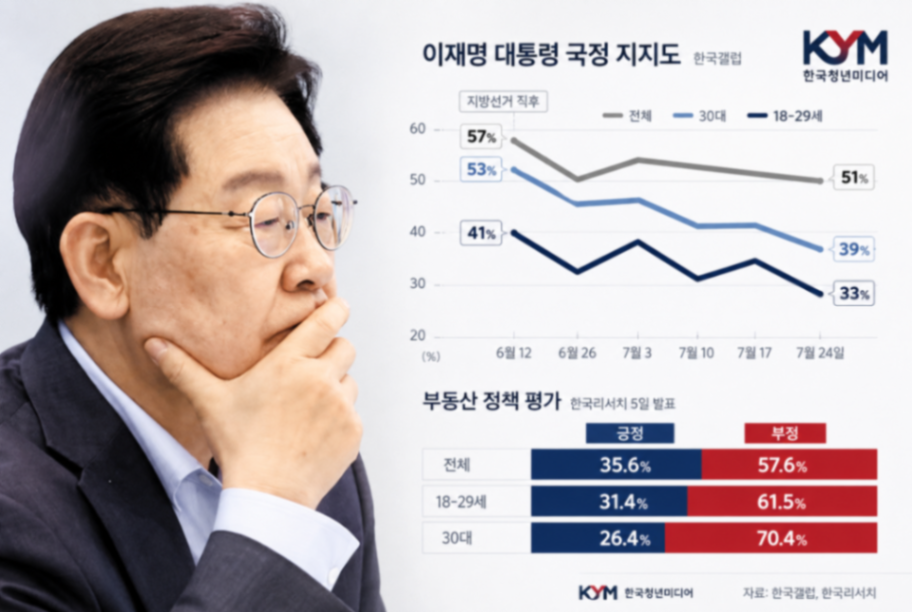
- Gallup poll shows 30s positive evaluation plunges by 14%p… clear defection of core support base
- Real estate loan tightening and soaring jeonse/monthly rent maximize youth deprivation
- Aftermath of 'investigative power abolition' causes 30s female approval rating to plummet from 70% to 47%, "heightening sense of crisis"
President Lee Jae-myung has stepped up to urgently appease public sentiment by rolling out youth policies for three consecutive days. This move is interpreted as a response to the heightened sense of crisis within the ruling party regarding the upcoming election as presidential approval ratings plummeted, centered around the 2030 generation.
Following his order at the senior secretaries' meeting on the 6th defining youth as a vulnerable class and calling for a fast-paced policy rollout, President Lee instructed a review of the Individual Comprehensive Asset Management Account (ISA) reform plan on the 7th. Over the weekend on the 8th, he went all-out to soothe the youth by abruptly announcing 22 tasks through social media to resolve the 'marriage penalty,' including easing loan requirements.
Behind this 'relay of youth messages' lies the collapse of the core support base. According to a comparison of Gallup Korea polls from June 12 and July 24, while overall positive evaluations fell by 6 percentage points, those among people in their 30s plummeted by a massive 14 percentage points (53% to 39%) and those in their 20s by 8 percentage points (41% to 33%), significantly exceeding the average drop. A Hangil Research survey (on the 5th) also showed that 7 out of 10 people in their 30s negatively evaluated state affairs and real estate policies.
Policy failures such as real estate loan regulations and investigative power adjustments are pointed out as the fundamental causes of the youth defection. Unlike older generations, opportunities to buy a home through loans were deprived, and coupled with soaring jeonse and monthly rent prices, youth frustration reached the brink of explosion. The backlash from 2030 women, who were once a solid support base, is particularly painful. Amid growing concerns over investigative vacuums in violent crimes following the 'abolition of prosecutors' supplementary investigative powers,' positive evaluations among women in their 30s plummeted from 70% in March to 47% in July, based on Gallup integrated surveys.
Without a comprehensive renewal of the state administration's direction rather than fragmented message politics, experts warn it will be difficult to halt the defection of the 2030 generation. They point out that top-down directives poured out without solving structural problems such as rising home prices and security anxieties are wholly inadequate to reverse the worsening youth public sentiment.