


- Presidential Committee of Light begins collecting records related to the Dec. 3 incident starting July 29
- Silver foil blankets, light-up sticks, and personal memos included in collection targets… Criticized as 'show-y sanctification'
- Cash-on-delivery postage support and on-site visits for large items… Questions raised over historical value compared to tax input
- "Emotional administration without objective verification criteria"… Concerns over undermining national record preservation principles
As the presidential 'Committee of Light' embarks on a massive donation drive to preserve records related to the Dec. 3 emergency martial law incident at the national level, the ambiguity and excessiveness of the collection targets have come under fire. Criticism is mounting that the committee is wasting administrative power and taxpayer money by turning personal emotional memos and concert light-up sticks—unrelated to uncovering the truth of historical events—into 'national archives.'
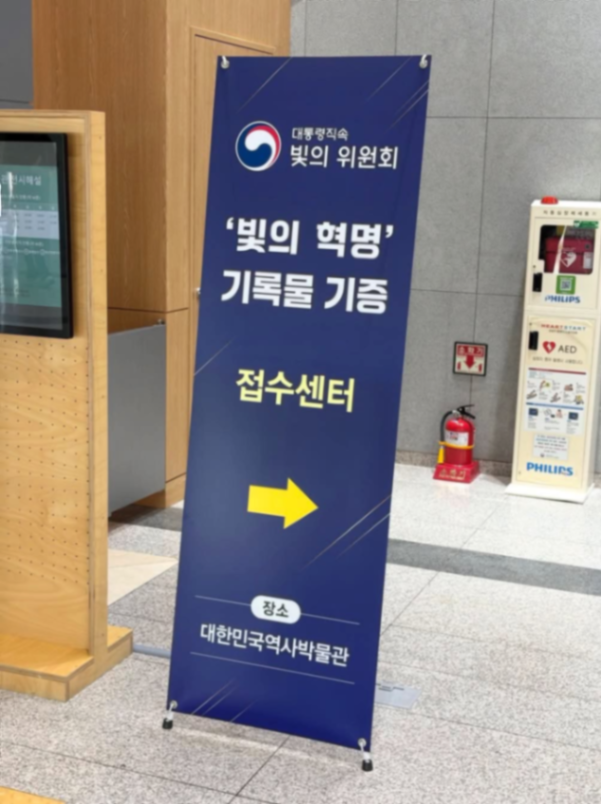
Starting July 29, the Committee of Light began receiving donations of so-called 'Records of the Light Revolution' owned by citizens through the e-People portal and on-site reception centers in Seoul and Sejong. The problem lies in the scope of donation targets specified by the committee. Beyond materials with historical value such as citizen declarations and on-site evidentiary videos, it has classified virtually all kinds of miscellaneous items as national historical assets, including personal diaries and notes, silver foil blankets, and idol light-up sticks brought to protest sites.
Even more serious are the national budget and administrative power poured into this indiscriminate collection process. The committee introduced a 'cash-on-delivery' method where the state covers the cost when documents and physical records are received via courier or registered mail. For large physical items, it even provides a 'visit-and-receive' service where officials coordinate schedules with owners to pick up the items in person on-site. Without objective verification procedures, national taxes and public servants' labor are effectively being poured into collecting private belongings.
Park Mi-kyung, chairperson of the Committee of Light, packaged this donation campaign as "a historical asset showing the courage of the citizens who protected democracy." However, some in academia and political circles point out that this is an action undermining the solemnity of national archive preservation. They argue that rather than collecting records to study the essence of historical events, it is an emotional, blind 'sanctification' and a typical show-based populist administration.
Voices are growing that while records of civic consciousness overcoming a national crisis are important, the process must not stray beyond the bounds of common-sense public administration. Given that this is a collection and preservation project involving massive budgets, critics point out that thorough and objective criteria for evaluating historical value must be re-established first.