

- Hints at strong response with "prosecution for sharing on SNS" regarding suspicions of North Korean nuclear wastewater release
- 45㎍/L of uranium detected in Seogeomdo intake well, leading to immediate closure and worsening drinking water shortages on the island
- Criticized for drawing the line at "natural origin" and applying a "double standard" compared to past Fukushima response
Amid the detection of uranium, a radioactive substance exceeding standard limits, in the tap water of Seogeomdo, Ganghwa-gun, Incheon, the government—which should be investigating the cause—is courting controversy over "silencing" the public by threatening to prosecute those raising suspicions under the Information and Communications Network Act. Criticism is mounting that rather than conducting a thorough investigation into what is a grave security issue involving fears of a radiological terror attack from North Korea, the government is overly intent on controlling public opinion.
As claims spread that the excessive uranium concentration in Seogeomdo's water facilities was caused by North Korea's Pyongsan uranium refinement plant, the government warned of strong legal action, stating, "We plan to file complaints under the Information and Communications Network Act against those who distribute and share unverified information via social media." The government maintains the stance that recent uranium concentrations around Ganghwa Island and the Han River estuary range between 0.133 and 3.025㎍/L, falling within naturally occurring levels, and that the Seogeomdo incident is also a phenomenon caused by underground bedrock.
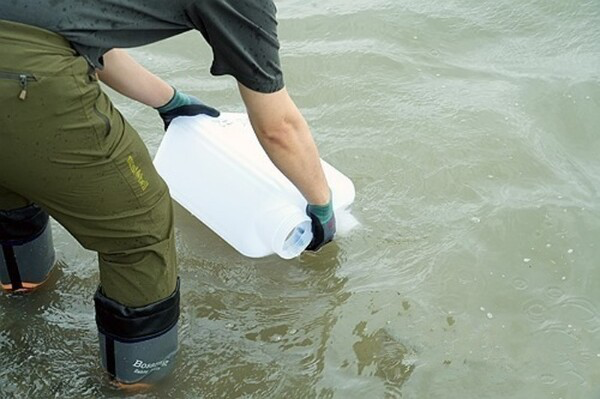
In fact, an inspection by the Incheon Metropolitan City Waterworks Headquarters on the 6th of last month detected uranium exceeding the drinking water standard (30㎍/L) in Seogeomdo's tap water, and a second inspection on the 16th confirmed 45㎍/L in one of the collection wells, leading to the immediate closure of the facility. Consequently, residents within the Civilian Control Line, where boat is the only means of transportation, are suffering from an extreme drinking water shortage, having to procure bottled water at their own expense.
For years, experts have warned of the possibility that high-level radioactive wastewater from North Korea's Pyongsan plant could flow through the Yesong River into the Yellow Sea, defining this as an asymmetric threat akin to "cross-border environmental aggression."
Regarding the government's stern "threat of prosecution," some point out a double standard. They criticize that while politicians and the government previously took the lead in condemning Japan's release of Fukushima nuclear wastewater, they are now trying to silence the public through judicial punishment rather than resolving scientific anxiety when faced with water quality anomalies in a border area directly linked to the safety of the metropolitan region. If transparent information disclosure and multi-faceted epidemiological investigations do not take precedence, public distrust regarding security complacency is expected to spread uncontrollably.
Seogeomdo's 'Uranium Tap Water' Fear... Government Threatens 'Information and Communications Network Act Prosecution' Instead of Fact-Finding
Views 332

React
Choose a reaction