



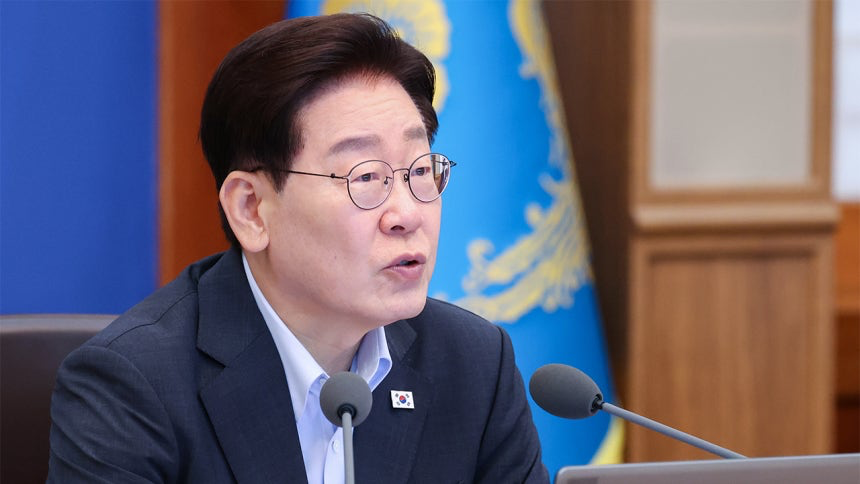
- President Lee Jae-myung finally resolves Criminal Procedure Act amendment on the 4th
- People Power Authority: "Restrictions on warrant requests and expansion of dismissal of indictment are clearly unconstitutional clauses"
- Concerns over blind spots in victim protection outside of 7 major crimes… Warning of responsibility to the ruling party
The 'Criminal Procedure Act Amendment', which aims to completely abolish prosecutors' supplementary investigation authority, passed the Cabinet meeting on the 4th. The People Power Party strongly protested, saying that public opinion urging the President's exercise of the right to request reconsideration (veto) was ignored, and the confrontation between the ruling and opposition parties over future judicial system reorganization is expected to reach an extreme.
President Lee Jae-myung approved the amendment at the Cabinet meeting that day, evaluating it as an "inevitable measure of justice." This implies the situation is not serious enough to deny the National Assembly's legislative power. On the other hand, Park Choong-kwon, senior spokesperson for the People Power Party, immediately issued a commentary, strongly criticizing the move as a direct challenge to judicial justice and legislative overreach.
Focusing on the unconstitutionality and procedural flaws of detailed clauses within the amendment, the People Power Party argued that the provision restricting prosecutors' right to request warrants and the 'expansion of grounds for dismissal of indictment' added in a nighttime subcommittee directly violate the Constitution and the principle of legal clarity.
Concerns over structural side effects following the institutional changes were also raised. The opposition party analyzed that as the prosecutors' supplementary investigation stage disappears, the control mechanism to correct police investigation errors has vanished. They also warned that since the obligation to transfer all cases is limited to 7 major crimes, victims of other crimes will be left in blind spots of legal protection. The newly introduced prosecutor's 'fact-finding' authority was also evaluated as ineffective since no evidentiary value is granted.
Urging the necessity of follow-up legislation to prevent further judicial collapse, the opposition party emphasized that the responsibility for all confusion and side effects in the judicial system arising from the passage of this amendment rests entirely with the President and the ruling party.