



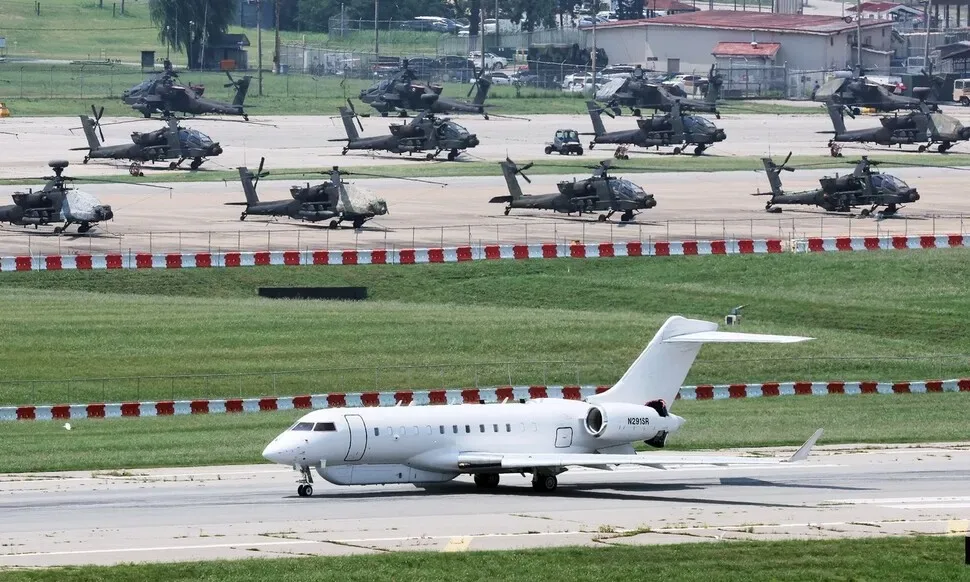
- UFS originally scheduled to end on the 27th will end early on the 21st after completing only Part 1 defense drills, per US proposal
- Part 2 counterattack operations planned from the 24th completely canceled; combined battalion-level and above field training drastically reduced
- Trump: "Good relationship with Kim Jong Un, I don't like the exercises"… US Department of Defense immediately implements instruction
- Unprecedented combined exercise reduction crisis… Ministry of National Defense attempts to quell concerns, claiming it is a "postponement, not cancellation"
The South Korea-US military authorities have decided to abruptly end the ongoing regular ROK-US combined exercise, 'Ulchi Freedom Shield (UFS)', in accordance with instructions from US President Donald Trump. It is an unprecedented situation for theater-level combined exercises to be curtailed and terminated midway at the request of the US side.
On the 19th, the Joint Chiefs of Staff announced through a press release that, based on the US proposal, the UFS exercise period originally planned from the 17th to the 27th would be shortened and adjusted to end on the 21st. Consequently, only Part 1 exercises, which focus on defense, will be conducted until the 21st, while Part 2 exercises centered on counterattack operations scheduled from the 24th have been completely canceled.
This disruption stemmed from President Trump's sudden instruction. On the 16th (local time), President Trump expressed his dissatisfaction with the ROK-US combined exercises via social media Truth Social, citing his good relationship with North Korean leader Kim Jong Un, and ordered Secretary of Defense Pete Hegseth to drastically reduce the scale of the exercises. The US Department of Defense (Department of War) responded the next day by actively committing to implementing the Commander-in-Chief's directive and pushed ahead with it.
Along with the shortening of the command post exercise, combined field training exercises (FTX) are also set to suffer a major blow. Of the 14 combined FTXs originally scheduled to be integrated at the battalion level or higher during this UFS period, discussions are underway for South Korea and the US to conduct them independently or postpone them. Due to the scaled-down training, some US military personnel dispatched from the US mainland are also expected to withdraw early. In addition, wartime command post operations will be bifurcated to run not only from the existing Seongnam 'CP Tango' but also from Pyeongtaek 'Camp Humphreys'.
While acknowledging the cancellation of the Part 2 exercise on the 19th, Minister of National Defense Ahn Gyu-back attempted to quell the fallout regarding the controversy over reduced combined FTXs, stating that not all 160-some exercises were canceled, but rather distributed and conducted throughout the year after the exercise period ends. However, as the combined defense posture—the foundation of security on the Korean Peninsula—is immediately shaken by the personal intentions of a key ally's supreme leader, criticisms are rising that a comprehensive revision of mid-to-long-term defense strategy is inevitable.