



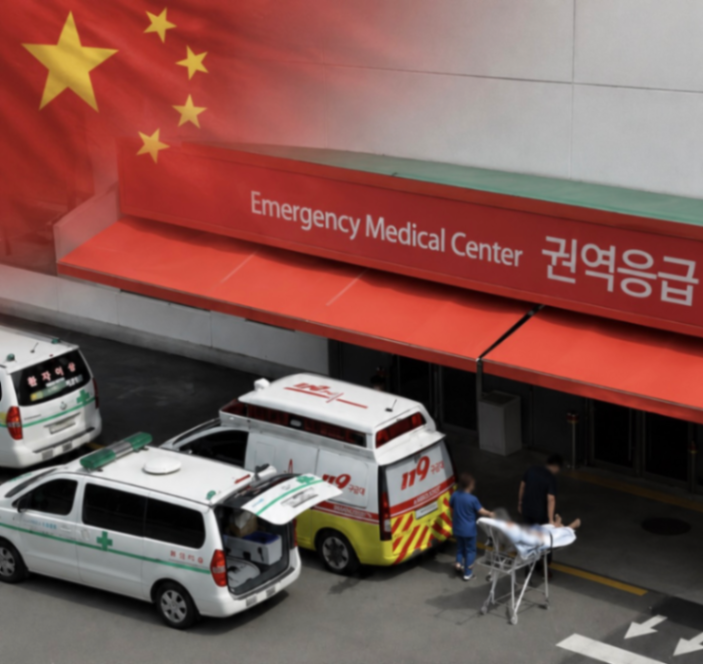
Chinese patient who collapsed while illegally working after entering on a tourist visa in 2019 passes away after 6 years and 4 months
Hospital left to shoulder 840 million won in medical cost losses due to current law prohibiting refusal of treatment
No regulations for family cost refusal or government support... ACRC urges "Government-wide reimbursement mechanism needed"
A domestic hospital that treated an unaccompanied foreign patient for over 6 years after they collapsed while illegally working after entering on a tourist visa has been left to shoulder a massive medical cost loss exceeding 800 million won. This is structural damage resulting from the fact that under current laws, hospitals are only given the obligation not to refuse treatment, with zero institutional mechanisms to reimburse unpaid medical bills or assist in repatriation to the home country.
According to the Anti-Corruption and Civil Rights Commission (ACRC) on the 29th, a Chinese national, Mr. A, entered the country on a tourist visa (C-1) in September 2019 and collapsed from a cerebral hemorrhage while working at a restaurant in Ulsan. Afterward, Mr. A was transferred to the intensive care unit of a local hospital and passed away in April of this year, 6 years and 4 months later, without regaining consciousness.
During this period, the accumulated unpaid medical expenses at the hospital reached approximately 840 million won. Under the Emergency Medical Service Act and the Medical Service Act, medical institutions cannot arbitrarily refuse to treat patients, so the hospital had no choice but to continue treatment reluctantly. Mr. A's children, residing in China, submitted a waiver of treatment citing financial difficulties and completely refused to pay the costs.
Unable to withstand the massive deficit, the hospital filed a grievance petition with the ACRC in July of last year. However, as a result of discussions between the ACRC, the Ministry of Health and Welfare, the Ministry of Foreign Affairs, and Ulsan City, it was confirmed that under current law, there is no legal basis for the government to reimburse the treatment costs of unaccompanied foreign patients or forcibly repatriate them to their home countries. The hospital has not received any reimbursement for the 800 million won in losses to this day.
To prevent the recurrence of similar cases, the ACRC officially recommended to the relevant agencies that they establish procedures for repatriating unconscious unaccompanied foreign patients and unregistered residents, and set up a system to support unpaid medical expenses for medical institutions.
In response, Ulsan City has set out to build administrative support manuals by department, and the Ministry of Foreign Affairs has also agreed to strengthen diplomatic intervention for repatriation should similar petitions arise in the future.