


- Entire domestic lineup of flagship Galaxy Z Fold 8 and Flip 8 launching on the 7th produced at the Gumi plant
- Pre-orders hit a record-high 1.44 million units… all-out effort to meet initial supply demands
- Accumulating high-difficulty assembly experience in tight spaces… serving as an outpost for transferring know-how to overseas plants
- Reaffirming the value of the domestic core production base amid US trade policy uncertainties and supply chain reorganization
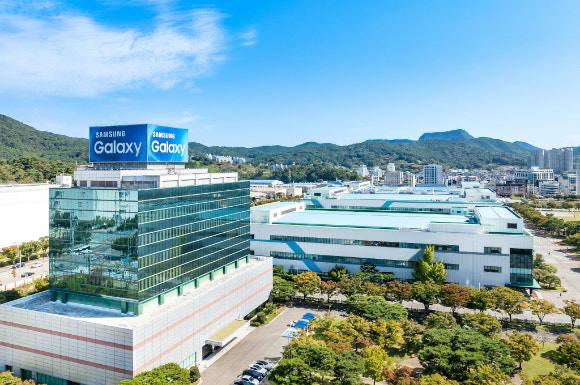
Ahead of its official domestic release on the 7th, Samsung Electronics' second-half flagship smartphone 'Galaxy Z Fold 8' series destined for the domestic market will be entirely mass-produced at the Gumi plant in North Gyeongsang Province. Amid a record-setting 1.44 million pre-order sales, the strategic value of the Gumi 'mother factory' is being re-illuminated as a pivotal stronghold that goes beyond a mere production base to respond to global supply chain uncertainties.
According to the electronics industry on the 6th, Samsung Electronics is mass-producing the entire domestic allocation of new foldable smartphones, including the Galaxy Z Fold 8 Ultra, Fold 8, and Flip 8, at the Gumi plant. While Samsung operates numerous global production bases in Vietnam, India, and Brazil to distribute the production of its flagship models, it assigns the domestic foldable flagship lineup exclusively to the Gumi plant.
Behind this production structure lies the advanced technological prowess and status of the Gumi plant as a 'mother factory.' Foldable smartphones are high-difficulty products that require numerous parts, such as hinges and flexible displays, to be precisely assembled in tight spaces. The Gumi plant serves as an outpost that preemptively develops and verifies automated processes and manufacturing technologies during new product mass production, and subsequently transfers them to factories around the world.
Rapid changes in the global trade environment are also structural factors elevating the importance of domestic production bases. Having experienced disruptions in parts procurement and restrictions on technical personnel exchanges due to border closures during the COVID-19 pandemic, the necessity of a domestic production network capable of immediate response in emergency situations has been proven.
Coupled with uncertainties in U.S. trade policies and supply chain reorganization movements across various countries, the task of securing diverse production options beyond tariff-free trade practices reliant on the Information Technology Agreement (ITA) has emerged. The role of the Gumi plant—which can simultaneously defend against technology security maintenance, early mass-production yield stabilization, and global trade barrier risks—is expected to expand further moving forward.