



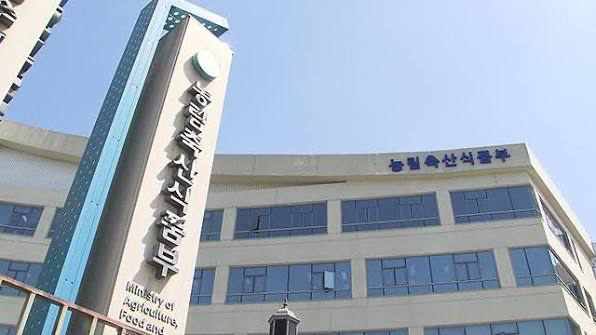
Next year's budget for the Ministry of Agriculture, Food and Rural Affairs has been set at 22.2215 trillion won, a 10.4% (2.0853 trillion won) increase compared to this year. Finances will be heavily concentrated on building a safety net for farm households to control supply and demand instability in crops caused by climate change and to prevent regional extinction. Accumulated debts of 3.1 trillion won across four funds, including farmland management and agricultural product price stabilization, will be repaid separately, and a new future response fund worth 1.1921 trillion won will be established.
The most noticeable change is the new introduction of the agricultural product price stabilization system. 9.1 billion won has been allocated to build a system that compensates for the difference when major agricultural market prices fall below the base price. To prepare for climate disasters, the agricultural disaster insurance budget will be expanded to 831.3 billion won, and a new quasi-insurance for crops (7.7 billion won) will be introduced. 250.9 billion won has been earmarked for pumping station improvement projects for drought response, and 44 billion won for securing foot-and-mouth disease SAT1 type vaccines.
The basic income pilot project for agricultural and fishing villages will double its target areas from the existing 17 counties to 35 counties next year. Related budgets will also increase significantly from 304.7 billion won this year (including supplementary budgets) to 1.1658 trillion won next year. To ease the financial burden on local governments, the national subsidy rate will be raised from 40% to 50%. The public interest direct payment budget surpassed 3 trillion won for the first time in history, reaching 3.0615 trillion won. The basic direct payment unit price for non-promotion area fields was matched to the paddy level, and the scales of strategic crop direct payments (456.8 billion won) and eco-friendly agriculture direct payments (64.1 billion won) were increased. An animal welfare livestock direct payment system (3.4 billion won) targeting layer chicken and pig farms will also be implemented.
Measures to ease the management burden of farming households will be implemented in parallel. Support for fertilizer (500 billion won) and feed (150 billion won) raw material purchase funds will be increased, and public-type seasonal worker workplaces will be expanded to 200 locations. 22.8 billion won will be invested in facility and equipment support for joint farming corporations, 50.4 billion won in low-interest loans, and a youth agricultural school will be newly established with 9 billion won.
Capital is also being invested in the future industrialization of agriculture and export support. A new fund for supporting the overseas expansion of K-food ingredients (136 billion won) will be established, and export vouchers (88 billion won) and next-generation K-food promotion targets (200 entities) will be expanded. In the agricultural AX (AI transformation) sector combining advanced technology, agri-food physical AI demonstration (20.8 billion won), AI and ICT-based smart livestock complexes (44.1 billion won), and agricultural AX platform construction (18.0 billion won) will be promoted. The construction of a smart fulfillment center in the distribution sector (5.5 billion won) and the expansion of AI smart agricultural product distribution centers (27.8 billion won) will also proceed.
In the food welfare sector, the agri-food voucher budget was increased to 86.6 billion won, including marine products in the supported items. Support for pregnant women's eco-friendly agricultural products (31.4 billion won) and the university students' "A Thousand Won Breakfast" (17.4 billion won) projects will continue to expand. To build companion animal infrastructure, projects for preparing the establishment of the Animal Welfare Promotion Agency (1 billion won) and the Animal Medical Information Integrated Management System (3.9 billion won) will be launched.
The government is also reorganizing the fund management structure. Farmland management, agricultural product price stabilization, and FTA funds will be integrated and reorganized into a "(tentative name) Agricultural Development Fund" system, and 200 billion won in government contributions has been allocated to the Rural-Urban Win-Win Cooperation Fund for the first time.