



- President Lee Orders Overhaul of 22 Systems... Anticipated Raising of Income Requirements for Loans Such as Stepping-Stone Loans
- Improvement of Disadvantages Including Reverse Discrimination in Subscription Point System and Heavy Acquisition Taxes (8-12%) for Multiple Homeowners
- Comprehensive Evaluation of 389 Youth Programs Involving 30 Trillion Won Annually... Low Perception Leading to Abolition
- Promise of '300,000 Jobs' Amid 26 Consecutive Months of Declining Youth Employment Rates... Effectiveness is Key
The so-called 'marriage penalty,' where couples face disadvantages in loans, housing subscriptions, and taxes upon filing their marriage registration, is set for a comprehensive overhaul. As the alienation of youth public sentiment accelerates with the approval rating of the 2030 generation lingering in the 30% range, the government has launched an all-out response, including restructuring annual youth policies worth 30 trillion won and promising quality jobs.
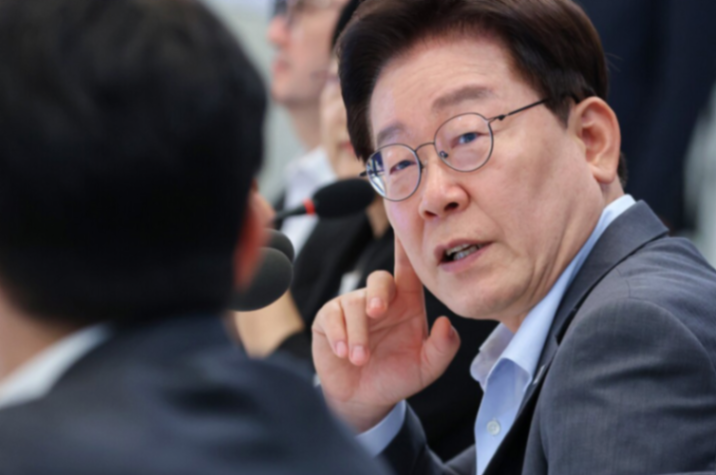
On the 8th, President Lee Jae-myung stated via social media, "There should be no hesitation in getting married due to state policies," and instructed relevant ministries to devise 22 policy improvement measures. The core is resolving institutional reverse discrimination against dual-income newlywed couples. Current low-interest loans such as Stepping-Stone and Bogeumjari Loans have a standard of an annual income of 85 million won or less, creating a structure where dual-income couples working at large corporations are excluded from benefits. The government plans to significantly raise these income requirements exclusively for newlyweds.
Public housing subscription point systems that were differentially granted based on the duration of marriage (3 points for 3 years or less, 1 point for 5-7 years) are also stepping toward modification and abolition. This is because they have been pointed out as the main culprit causing couples to delay marriage registration. On the tax front, the government plans to expand the scope of special exemptions to improve the irrationality where a man and woman each owning a single home get married, purchase a new home, and are classified as multiple homeowners, thus facing a punitive acquisition tax rate of 8% to 12%.
Qualitative restructuring beyond the quantitative expansion of policies will also be implemented in parallel. Starting next year, the Office for Government Policy Coordination will conduct a comprehensive evaluation of 389 youth policy projects, into which 30 trillion won based on this year is injected. Centering on six major areas including employment, housing, assets, and finance, the plan is to develop a 'Youth Perception Index' within this year and boldly phase out projects with low effectiveness.
Behind these omnidirectional policy reforms lie a severe youth employment cold wave and worsening public opinion. As of June, the youth employment rate stood at 43.9%, failing to escape a downward trend for 26 consecutive months. Deputy Prime Minister and Minister of Finance and Economy Koo Yun-cheol announced that the government will create more than 300,000 jobs by 2030 through fostering specialized talent in high-tech industries and expanding public and private jobs. However, it remains uncertain whether such top-down institutional improvements can bounce back the deteriorated youth indicators in a short period.