



Passed with 175 votes in favor, led by the pan-ruling party... Comprehensive overhaul of the criminal justice system since its enactment in 1954
Prosecutors banned from direct and supplementary investigations, dedicated solely to indictment... Only allowed to 'request' supplementary investigation from the police for a maximum of 1 month
Establishment of judge's 'dismissal of indictment' power becomes a point of contention... Ruling party calls it a "self-pardon," opposition calls it "control of illegal investigations and codification of precedents"
National Assembly Act amendment (shortening fast-track deadline) carried over to August National Assembly due to the end of the legislative session
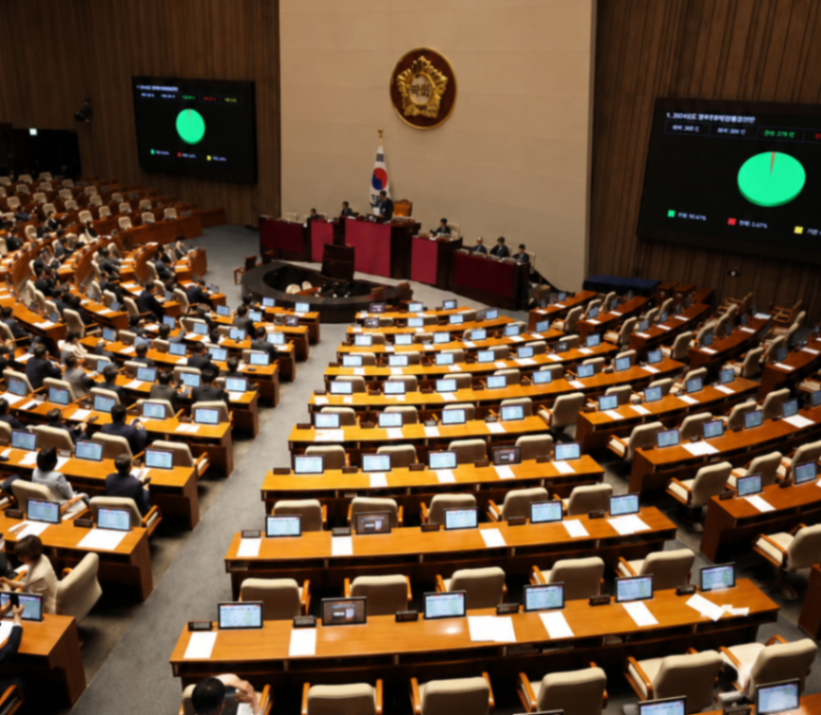
An amendment to the Criminal Procedure Act that completely strips prosecutors of their investigative authority crossed the threshold of the National Assembly plenary session on the 31st. The era of the 'investigating prosecutor,' which had continued for 72 years since the enactment of the Criminal Procedure Act in 1954, has come to an end.
The National Assembly held a plenary session on the afternoon of the same day and put the amendment to the Criminal Procedure Act to an electronic vote. As a result of the voting, out of 178 attendees, it was passed with 175 in favor, 2 against (Kwak Sang-eon of the Democratic Party of Korea, Lee Joo-young of the New Reform Party), and 1 abstention (Lee So-young of the Democratic Party of Korea).
The core of this amendment is the complete separation of the prosecution's investigative and indictment powers. In the future, prosecutors will no longer be able to conduct direct investigations or supplementary investigations to fill in the gaps of police investigations, and will be exclusively responsible for indictment work.
Instead, they can 'request' the police to supplement the investigation, and the police must wrap up the investigation within a maximum of 1 month and hand over the results to the prosecution. In addition, to prevent the concealment or manipulation of investigations, chronological registration of all investigative data in the Criminal Justice Information System has been made mandatory.
Some devices for protecting victims' rights were also newly established. The scope was expanded so that complainants can also file objections against the police's decision not to forward a case, and the right to view and copy investigative records was codified.
In particular, regarding the judge's power to issue a 'ruling for the cancellation (dismissal) of indictment' introduced to check the prosecution's monopoly on indictment, the ruling and opposition parties showed sharp differences of position in the unlimited debate (filibuster) that lasted for 24 hours the previous day.
People Power Party strongly criticized the provision as a 'self-pardon' targeting President Lee Jae-myung and the destruction of the judiciary. In addition, they raised structural concerns that the loss of investigative powers would delay the processing of complex livelihood cases such as lease fraud, and that the police power, left unchecked, would become bloated.
On the other hand, the Democratic Party of Korea countered that the fundamental cause of prolonged unsolved cases and distortions lay in the abuse of the prosecution's supplementary investigation rights. They dismissed the controversial indictment dismissal power as merely a check device concretizing established Supreme Court precedents (illegal entrapment and abuse of indictment power) into legal texts, and dismissed concerns about arbitrary rulings by the judiciary as groundless since lawful re-indictment is possible.
Meanwhile, the National Assembly Act amendment to shorten the fast-track bill review period from a maximum of 330 days to 90 days was also submitted on the same day, with the People Power Party confronting it with a filibuster. However, as the July extraordinary session of the National Assembly ends at midnight today, the final vote on the bill is expected to be carried over to the first plenary session of the August extraordinary session.