


- Large-scale citizen rally held in downtown Seoul on Liberation Day (August 15) demanding electoral system reform
- Participants voice "concerns over disenfranchisement"... raise suspicions of election fraud and demand same-day voting and hand counting
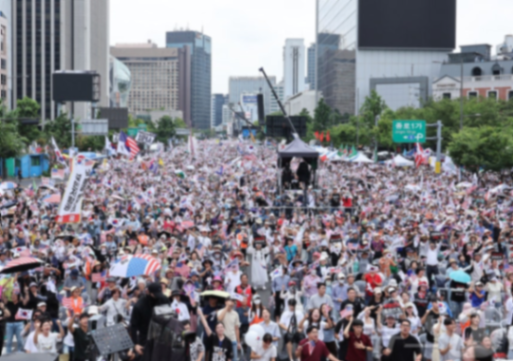
- Tens of thousands gather waving Taegeukgi and American flags; police control major roads and go all out to prevent safety accidents
- Amid Election Commission's stance that "there are no system issues," the task of strengthening transparency to resolve election distrust emerges
On the 15th, marking the 81st Liberation Day, a large-scale citizen rally was held in the heart of downtown Seoul, urging the protection of voting rights and a complete overhaul of the current electoral system.
Voluntarily gathering at the rally, numerous participants waved Taegeukgi and American flags, strongly expressing distrust in the current early voting and electronic counting systems. Shouting that "disenfranchisement and the infringement of voting rights must be prevented," they demanded a thorough investigation into suspected election fraud along with core requirements: "conducting re-elections," "abolishing early voting and unifying into single-day voting," and "introducing 100% hand counting." The organizers and participants argued that the current election management system fails to guarantee the transparency of voting, which is the foundation of democracy.
This large-scale rally indicates that deep-seated distrust regarding election fairness among some segments of civil society remains unresolved. Continuously raising issues such as ballot paper management systems and the possibility of electronic manipulation of counting machines (sorters), they emphasized that only analog, 100% hand counting can put an end to social conflicts surrounding election results.
On the other hand, election authorities, including the National Election Commission, maintain the stance that manipulation or intervention is structurally impossible under the current election system, and that voting and counting procedures are managed transparently. Experts point out that rather than dismissing the fierce protests and divided public opinion of citizens gathered on the streets as mere suspicion, state agencies must proactively step up institutional communication to more meticulously prove the transparency of the election process and restore public trust.