



The opposition's reckless overreach of driving foreign policy—the president's inherent authority—into a constitutional violation
Legal circles point out that "policy judgment cannot be grounds for impeachment," while online sentiment turns cold
"Even if it was dropped in the 2nd motion, the fact that it was included in the 1st is disgusting," and "What on earth is rebellion?" criticisms pour in
The opposition bloc's, including the Democratic Party, 1st impeachment motion against President Yoon Suk-yeol, which shook the political landscape in the past, is back in the spotlight for its aggressive political offensive that crammed even "judgments on foreign policy" into the grounds for impeachment. Beyond the constitutional critiques from the legal community, a fierce backlash is brewing among netizens who belatedly came to know about this.
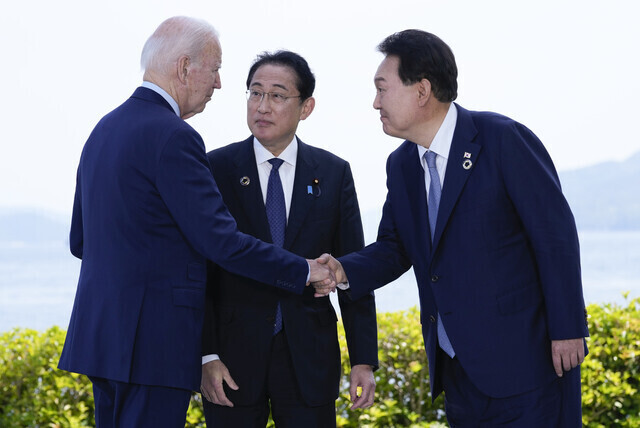
The 1st impeachment motion proposed by the opposition at the time explicitly stated regarding President Yoon's foreign policy: "Under the guise of value-oriented diplomacy, it is hostile toward North Korea, China, and Russia while persisting in a bizarre, Japan-centric foreign policy."
Legal circles and constitutional scholars have strongly criticized this as an "anti-constitutional perspective." Article 65 of the Constitution strictly limits the grounds for impeachment to "when a person has violated the Constitution or laws in the performance of official duties," and the Constitutional Court has also ruled twice that "judgments on policy cannot be grounds for an impeachment motion."
This reckless overreach in the 1st motion is once again becoming known to the public through social media and other channels, sparking strong resistance. On posts covering the news, top-voted comments with hundreds of likes appeared, stating, "Even if it was deleted in the 2nd motion, the very fact that they included doing pro-U.S./Japan and anti-North/China/Russia in the 1st impeachment motion as a problem is disgusting."
In addition, public opinion expressing fundamental doubts about the impeachment situation itself is spreading. Some netizens directly criticized the opposition's framing, saying, "Martial law is the president's inherent authority and decision in a crisis situation, and I simply cannot understand what on earth is an insurrection," and "Isn't the real insurrection the opposition's obstruction and the attempts to overturn the national system, such as suspicions of election fraud by the National Election Commission?"
Of course, comments from opposition supporters have also been posted explaining that "the 1st grounds were discarded, and the 2nd motion focused on the unconstitutionality of declaring martial law, the mobilization of military and police, and the crime of insurrection." However, it seems difficult to avoid the criticism that the initial recklessness—where the major opposition party used its numerical superiority to try and use the president's legitimate diplomatic line as fodder for impeachment—turned into a self-defeating move that undermined the legitimacy of the entire impeachment motion.