

- Preferential type (12%) and general type (6%) determinations reversed due to external corporate information linkage error
- Concerns rise over damages to subscribers who terminated existing 'Youth Leap Account' trusting eligibility approval
- Korea Inclusive Finance Agency: "Affects less than 1% of total eligible persons; proceeding with measures to cancel special early termination"
- Emergency weekend work initiated for account restoration and correction guidance procedures
The Korea Inclusive Finance Agency (KINFA), a public financial institution, committed a system error that reversed the preferential and general type determinations during the qualification screening process for the 'Youth Future Savings'. As a result, subscribers who terminated their existing 'Youth Leap Account' trusting the government's approval notice are facing potential disadvantages, prompting KINFA to initiate emergency account restoration measures.
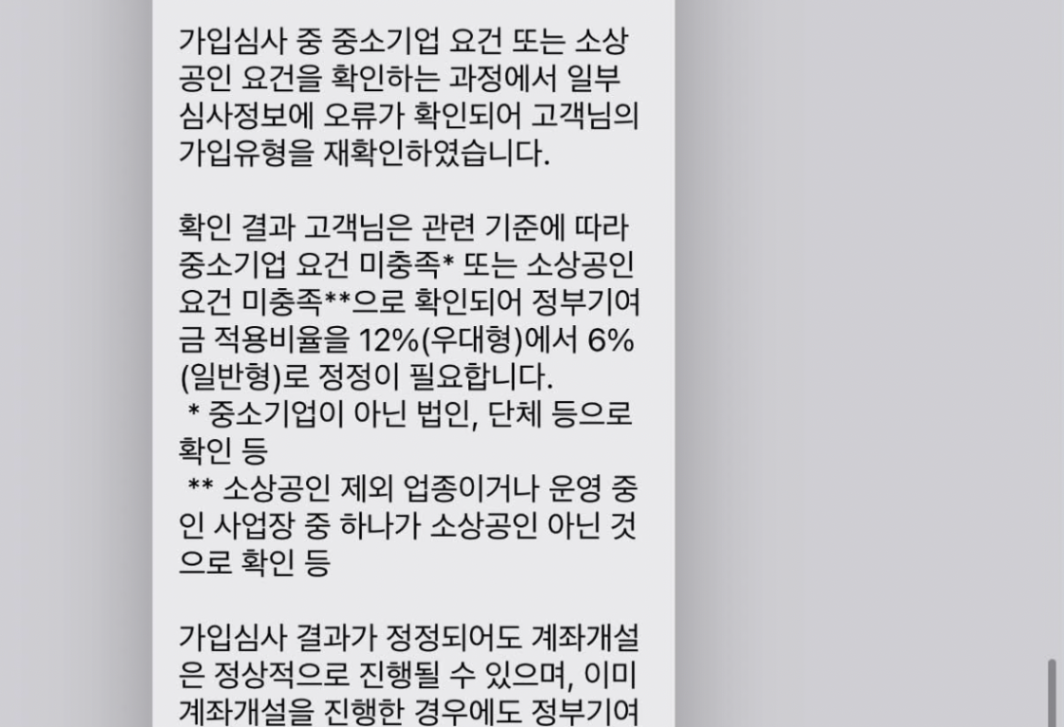
This confusion arose when applicants for the Youth Future Savings who received eligibility notices for the 'preferential type' (12% government contribution), applicable to small and medium-sized enterprise (SME) employees, were sent correction text messages for the 'general type' (6%) just a day later. The Youth Future Savings is a policy financial product targeted at youth aged 19 to 34. A 12% matching rate applies to SME employees with a total annual salary of 36 million won or less, whereas the general type (total salary of 60 million won or less) is limited to 6%.
The problem arose from the structure of the switching (transition) system. Authorities designed the system such that existing Youth Leap Account subscribers could only maintain benefits by obtaining approval for the Future Savings and then executing a 'linked-subscription special early termination' of their existing account. However, immediately after receiving the preferential type approval notice and terminating their existing Leap Account, the status was downgraded and corrected to the general type. This exposed subscribers—for whom maintaining the existing Leap Account was more advantageous in terms of interest rates and contribution structures—to the risk of loss.
KINFA acknowledged that an interpretation error, such as omitted screening during the data linkage and verification process with external corporate information providers (like Korea Evaluation Data), had occurred. According to KINFA's own estimates, this screening error occurred in less than 1% of the eligible applicants who met the qualification requirements out of a total of 2.34 million applicants.
KINFA is currently proceeding with procedures to cancel the special early terminations of existing Youth Leap Accounts for subscribers affected by the screening error and to restore them to their original accounts. While the agency plans to swiftly finalize target notifications and restoration work through an emergency work system, criticism regarding the public financial institution's poor basic data verification seems difficult to avoid.