
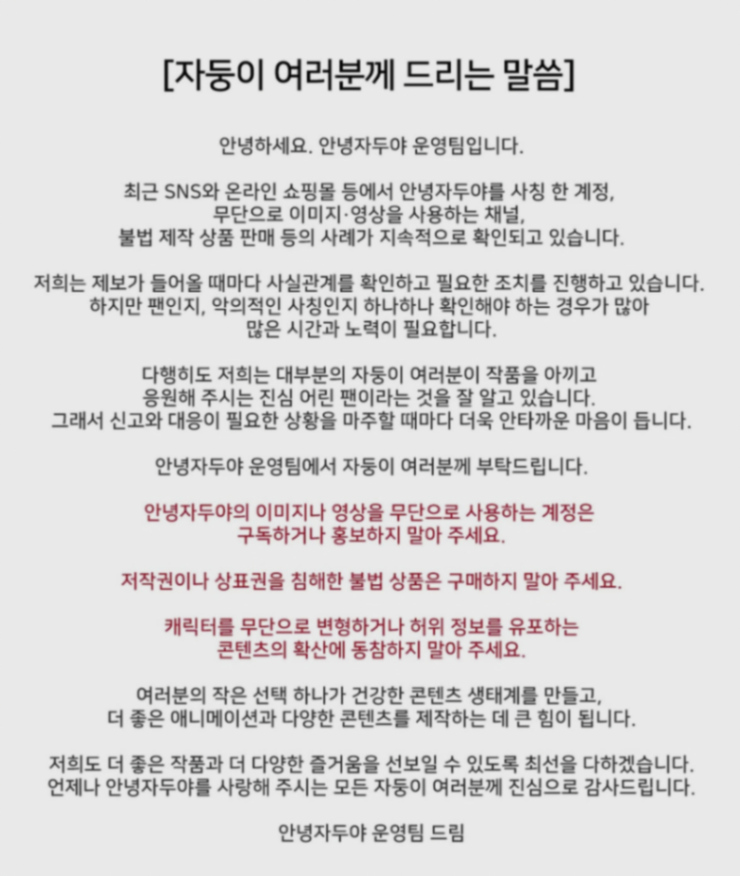
- Official management team issues strong warning against unauthorized image use, impersonation, and illegal merchandise sales
- Popular fan archive account immediately apologizes and announces transition to private/cessation of operations by the 10th
- Netizens express disappointment over lack of flexibility, stating "fan accounts were more fun and served as better promotion than the official one"
- Clear property rights protection vs. stifling voluntary fandom viral marketing... A challenge for the content industry
As the official management team of the popular domestic animation 'Hello Jadoo' began a crackdown on unauthorized use of copyrighted material, a well-known non-profit fan account announced it would cease operations. The dilemma surrounding secondary creation copyrights has surfaced, as the company's principled stance on exercising its intellectual property (IP) rights clashes with the fandom's disappointment over what they see as an inflexible measure that kills off voluntary viral marketing effects.
Recently, the official 'Hello Jadoo' social media account released a statement outlining a strict response policy against channels using images and videos without permission, impersonation accounts, and the sale of illegally produced goods. The management team urged, "Please do not participate in the spread of copyright-infringing content for the sake of a healthy content ecosystem."
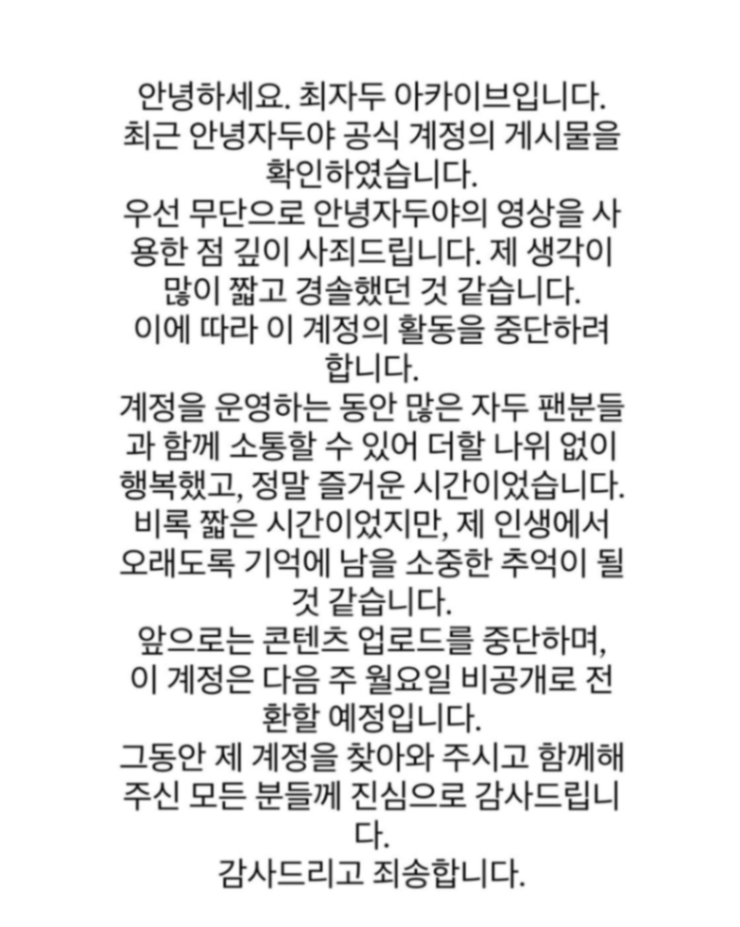
Immediately after the notice was posted, the 'Choi Jadoo Archive,' a fan archive account that gained popularity by editing and uploading character videos, posted an apology. The account operator stated, "I deeply apologize for using the videos without permission," and while clarifying that there was no profit generation, announced that the account would be switched to private and operations would cease on the 10th.
As news of this spread, a heated debate erupted on social media. The comment section of the fan account was filled with criticism of the official side's actions, with comments such as, "The fan account's edits were much more fun than the official account," and "It lacks flexibility to cast aside a fandom that promotes the show for free without even generating profit." On the other hand, there are many voices defending the company's decision, arguing, "Even if it's non-profit, unauthorized use is a clear infringement of property rights," and "The company had no choice but to step in due to cases that crossed the line, such as illegal merchandise sales."
This situation clearly illustrates the dilemma faced by companies holding content IP. While it is a company's natural duty to strictly protect copyrights, voluntary 'meme' creation and secondary works by fans act as key drivers of success in a short-form-oriented new media environment. As critics point out that a blanket copyright crackdown without clear guidelines could lead to the departure of the core fandom, establishing flexible, mutually beneficial standards to legitimize secondary creations remains a challenge for the industry.