

- Controversy over the survival secret of large unmanned arcades occupying high-rent commercial districts like Gangnam and Seomyeon
- Blind spot of 'cash business' centered on coins and banknotes… Optimized for 'mixing' criminal funds
- Trade payment disguise method of inflating import costs of 100-won plush toys and remitting to overseas ghost companies
- Market disruption causing soaring commercial rents… Urgent monitoring by authorities required, such as detecting abnormal cash sales
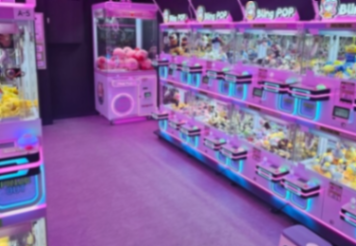
Controversy is rising over the survival secret of large-scale 'claw machine arcades' occupying prime commercial districts nationwide, such as Gangnam, Gwangalli, and Seomyeon. This is due to a paradoxical structure where stores devoid of customers manage to stay open without closing, despite skyrocketing monthly rents reaching tens of millions of won. Recently, centered around online communities and experts, reasonable suspicions are spreading that the unique 'cash payment' structure of these unmanned arcades is being abused as a perfect laundering route for illegal criminal funds.
The most critical blind spot is that claw machine businesses are strictly cash-based. Due to the structure where customers insert coins or banknotes directly into machines to play, it is virtually impossible for the National Tax Service or financial authorities to track 'who spent how much cash.' Exploiting this, criminal organizations use the so-called 'cash-mixing' method, pouring millions of won of massive black money secured from illegal gambling or drug dealing into empty machines every day, or turning it into fake cash sales on paper. Once normal income tax is paid at the end of the year, the criminal proceeds are cleanly laundered into 'legitimate business income' recognized by the state.
At the same time, the method of 'disguising trade payments' to siphon funds overseas is being pointed out. After establishing ghost companies in China or Hong Kong, low-quality plush toys worth 100 won in original cost to be filled in the machines are imported, and fake contracts with inflated unit prices, claiming "premium plush toys worth 10,000 won each," are submitted to customs. Billions of won in funds disguised as normal trade transactions proudly flow overseas through domestic banks, which can then be used to operate illegal gambling servers or turn into foreign capital to purchase domestic real estate.
Because the very purpose of the business is money laundering rather than profit generation, they can afford abnormal rents that ordinary self-employed people cannot even imagine, disrupting commercial district market prices and pushing out innocent small business owners.
Currently, it is difficult to determine the suspicions of individual businesses from the outside, and they are placed in a blind spot beyond the monitoring net of financial authorities. The National Assembly and financial regulatory authorities must swiftly prepare preventive alternatives. In particular, it is urgent to establish a monitoring system that automatically detects excessive unissued cash receipt sales relative to fixed expenses like electricity bills for unmanned arcades where 100% cash payments occur. In addition, an amendment to the Anti-Money Laundering Act is required so that the Korea Customs Service and the Korea Financial Intelligence Unit can immediately cross-verify trade remittance cases that excessively exceed import unit prices.