



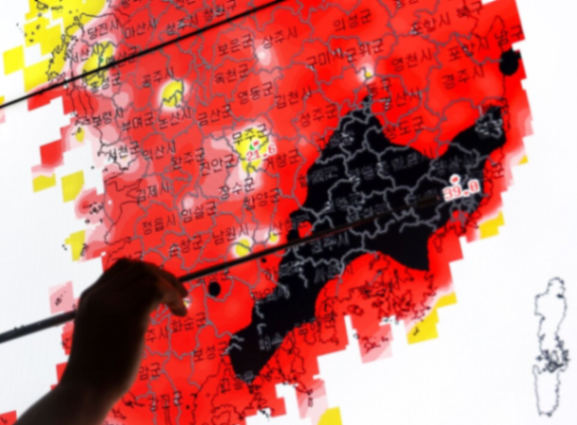
Korea Meteorological Administration issues 'Severe Heatwave Warning' for Gyeongnam region with perceived temperatures over 38°C
Most of the country to see scorching heat around 35°C and tropical nights above 25°C
"Immediate suspension of outdoor work, hydration, and mandatory 119 calls in case of heat-related illnesses"
As heatwave advisories and warnings are issued for most parts of the country on the 31st, special caution is urged as life-threatening, extreme kiln-like heat is forecasted mainly in the Gyeongnam region.
According to the Korea Meteorological Administration on the 30th, Friday the 31st will be mostly clear nationwide under the influence of the North Pacific high-pressure system, with daytime highs soaring between 31 and 38°C. This significantly exceeds average years (maximums of 29-33°C).
In particular, the meteorological agency issued a strong warning for parts of the Gyeongnam region where a Severe Heatwave Warning has been issued, stating, "The maximum perceived temperature is expected to rise above 38°C (or maximum temperature of 39°C), posing an extreme, life-threatening level of heat." Daytime temperatures in Gangneung, Busan, Ulsan, and Daegu are set to climb to 37°C, while Seoul, Cheongju, and Gwangju will also experience sweltering heat of 34-35°C.
The heat is not expected to subside overnight. With nighttime lows remaining above 25°C nationwide, many areas will experience tropical night phenomena.
To prevent heatwave damages such as heat-related illnesses, the meteorological agency provided strict behavioral guidelines. All outdoor activities and work except for essential tasks should be immediately suspended or postponed, and individuals should move to cool places such as heatwave shelters to get adequate rest and hydration. Furthermore, the agency urged people to frequently check the safety of vulnerable groups such as the elderly living alone, and to immediately call 119 without delay if symptoms of heat-related illness appear.
Meanwhile, fine dust concentrations nationwide on the 31st are expected to remain at 'good' to 'moderate' levels.